The butter lamps at Pemayangtse Monastery have been burning for three hundred years. Every morning, before the valley below has fully registered the dawn, a monk fills the lamps with fresh yak butter and lights them. He does not think of this as a three-hundred-year practice. He thinks of it as this morning's task. The continuity is not in the flame — the flame goes out, is relit, goes out again. The continuity is in the monk who shows up before dawn to fill the lamp.
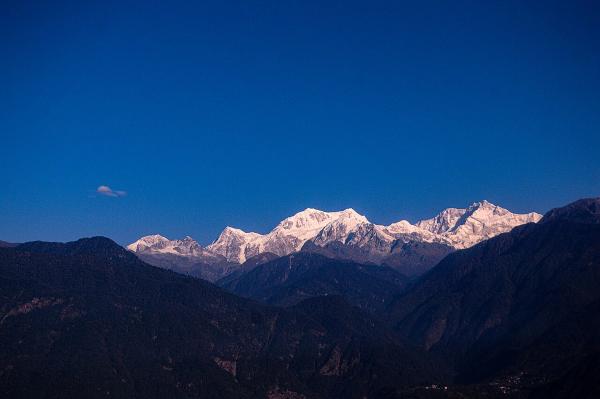
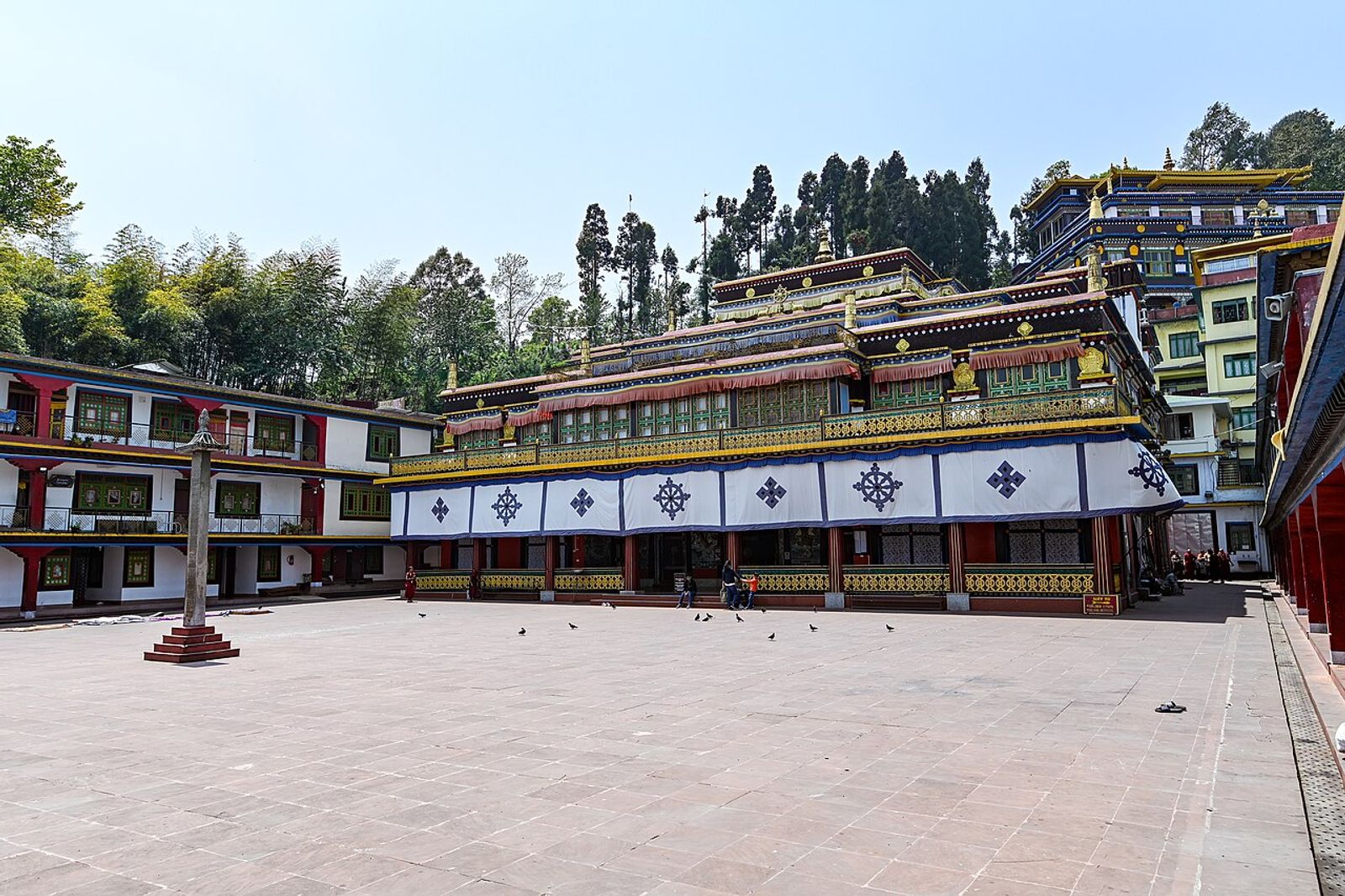
Pemayangtse — which means Perfect Sublime Lotus — was established in 1705 by Lhatsun Chhenpo, one of the three lamas who presided over the consecration of the first Chogyal of Sikkim sixty years earlier. It sits at 2,085 metres in West Sikkim, on a ridge that looks south toward the Teesta valley and north toward Kanchenjunga, which on clear mornings is so close and so large that it ceases to be a mountain and becomes a weather system.
Sikkim has over two hundred monasteries. This is a high number for a state of roughly 700 square kilometres. They range from small wayside shrines maintained by a handful of monks to large institutional gompas like Rumtek and Pemayangtse that function as centres of scholarship, art, and religious authority.
Rumtek and the Karmapa Question
Rumtek Monastery was built by the sixteenth Karmapa in the 1960s after he fled Tibet. He died in 1981, and the question of who would be recognised as the seventeenth Karmapa fractured the Karma Kagyu school in a dispute lasting over forty years. Two candidates were identified by different factions. Neither has been able to take full charge of the monastery. The butter lamps inside it are maintained by whoever is currently present, and the dispute continues in courts and careful political calculations.
The Thangka Tradition
A painter in one of the Pemayangtse workshops has been making thangkas for twenty years. He has painted this same figure — Tara, the mother goddess — dozens of times. Each time, she looks exactly the same. The iconographic grid specifies every proportion: the angle of her gaze, the position of her fingers, the width of her shoulders relative to her height. There is no artistic interpretation. The painting is a technical performance of a received specification. The painter is the medium, not the message — and has accepted this willingly.
The pigments are made from minerals ground by hand — lapis lazuli for blue, malachite for green, vermilion for red, gold leaf for highlights. Each colour is mixed fresh. The finished painting will hang in the monastery for as long as the monastery stands. In Sikkim, that tends to be a long time.
The Butter Lamp
The butter lamp does not know it has been burning for three hundred years. It knows only that it is burning now, that someone filled it this morning, that the flame is present. This is, perhaps, the only kind of continuity that matters — not the continuity of the same flame, but the continuity of the practice of keeping the flame, of the decision, made daily, to fill the lamp and light it and place it where it has always been placed.
The kingdom is gone, the Chogyal is gone, the political map has been redrawn. The practice continues. The prayer flags on the passes release their prayers into the wind. The monasteries hold their butter lamps. Kanchenjunga remains.