For three hundred and thirty-three years, from 1642 to 1975, Sikkim was a kingdom. It had a monarch — the Chogyal, which means Divine Ruler — a currency, a flag, a seat at certain diplomatic tables, and an identity that was neither Tibetan nor Nepali nor Indian, though it contained elements of all three. It had Kanchenjunga, the third highest mountain on earth, which the kingdom regarded not as a geographical feature but as a god, and treated accordingly.
In 1975, following a referendum whose legitimacy has been contested ever since, Sikkim was merged into India. It became India's twenty-second state. The Chogyal, Palden Thondup Namgyal, was stripped of his title and his palace. He died in 1982, twelve years before the Indian government formally acknowledged that the merger had ended a civilisation rather than simply reorganised a territory. His wife, the American Hope Cooke, had left years earlier, and wrote a book about the kingdom and its end that became one of the stranger memoirs of the Cold War era.
What the Kingdom Was
The Chogyal traced his lineage to Phuntsog Namgyal, who was crowned in 1642 in a ceremony performed by three Buddhist lamas who had arrived, according to legend, from three separate directions simultaneously. The kingdoms of the region recognised this as a sign and the dynasty held for three centuries, presiding over a state where Lepcha, Bhutia, and Nepali communities lived under a structure that was explicitly Buddhist in its governance. The monasteries were not separate from the state. They were part of the same organism.
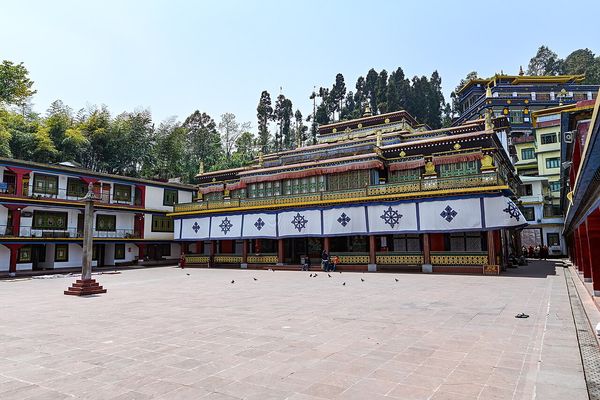
Rumtek Monastery, which the Karmapa — the second highest authority in Tibetan Buddhism — built in the 1960s after fleeing Tibet, became one of the most important Buddhist sites outside the Himalayas. Following the death of the sixteenth Karmapa in 1981, two claimants emerged to the title. The dispute between them has been running for over forty years, involving courts, governments, and a building that neither claimant has been able to fully occupy. Monasteries have been surviving disputes since before any of the parties were born. This one continues.
The Prayer Flags
Across Sikkim's mountain passes, strings of prayer flags run between poles, their printed sutras releasing into the wind with every movement. The flags are in five colours — blue for sky, white for air, red for fire, green for water, yellow for earth — and they are meant to carry the prayers printed on them outward, into the world, without the person who hung them having to do anything further. The wind does the praying. The human has done the hanging, which is enough.
The flags have been here through the entire 333 years of the kingdom and they are here now, in the republic. They do not belong to any government. They were not affected by the referendum. On the Nathu La pass, at 14,140 feet, Indian and Chinese border guards share a fence, and on both sides the prayer flags snap in the same wind.
Kanchenjunga
The last Chogyal said, toward the end, that Sikkim was not a country so much as a feeling, and that feelings do not require borders to survive.
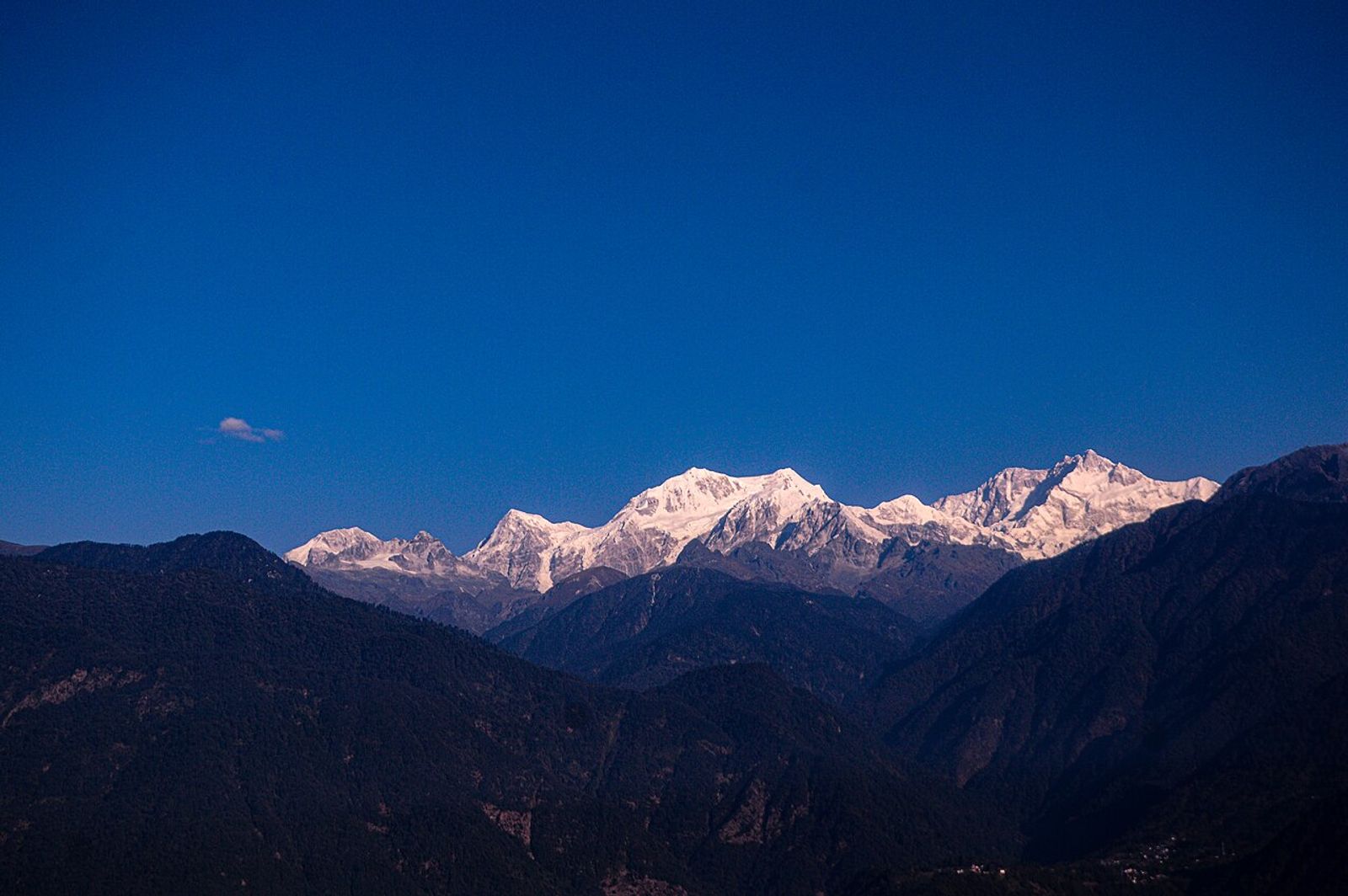
Kanchenjunga, 8,586 metres, is visible from everywhere in Sikkim on clear days. The Sikkimese have always believed that the summit should not be reached — that the last few metres belong to the mountain god and not to human ambition. Every expedition that has summited Kanchenjunga has, by convention, stopped a few metres short of the highest point, leaving those metres unclimbed. The British mountaineers who first reached the summit in 1955 did so at the request of the Chogyal, who asked them to honour the mountain's sanctity.
They honoured it. Every team since has honoured it. The highest point on Kanchenjunga has never been stood on. In Sikkim, this is considered not a failure of ambition but a success of something else — a recognition that some things are not improved by being conquered. The kingdom understood this. The mountain still does.