She is the youngest daughter, which in the Khasi hills of Meghalaya means she is the one who stays. Her elder sisters will leave, will build households of their own, will carry the clan name to their children. She will stay in the house she was born in, inherit the land, care for her parents in old age, and one day hand the house to her own youngest daughter, who will do the same. The word for this arrangement — khadduh — does not translate simply. It means something like the one who holds the line.
The Khasi and Jaintia peoples of Meghalaya are among the few remaining matrilineal societies of significant size anywhere in the world. Meghalaya's three main tribal groups — the Khasi, the Jaintia, and the Garo — all practice matrilineal descent, though the specific customs differ between them. This is not a recent arrangement or a response to any particular historical event. It is simply how these societies have organised themselves for as long as anyone has recorded them.
The Khasi Household
In a Khasi family, the youngest daughter does not leave home when she marries. She stays. Her husband comes to her. The house, the land, the ancestral property, and the responsibility of caring for elderly parents all pass to her, and one day to her youngest daughter in turn. Elder daughters are free to go, to establish their own households, to find their own paths. The khadduh is anchored.
This creates a household structure that is immediately legible once you know the rule: the house belongs to the women, the men are guests who have chosen to stay. Khasi men are not without authority — the maternal uncle holds significant social and ritual power within the extended family, and male elders run village councils. But legal ownership and lineage both travel through the female line.
What Outsiders Get Wrong
The word matriarchal is often applied to Khasi society, and Khasi women themselves tend to push back on it. A matriarchy would mean women hold political and social power in the way that men hold it in patriarchal societies. The Khasi system is matrilineal, not matriarchal — the two are not the same. Property and name travel through women. Decision-making and public authority still rest largely with men.
Many younger Khasi women speak about matriliny the way people speak about any inheritance — something they received, are still figuring out, and are not prepared to simply hand back. Urbanisation, evangelical Christianity, and wider Indian social norms all pull at the tradition. What holds it is less ideology than practice: this is how households are organised, how property changes hands, how children know which clan they belong to. The practice continues because it solves real problems, and the problems have not gone away.
The Rain That Connects Everything
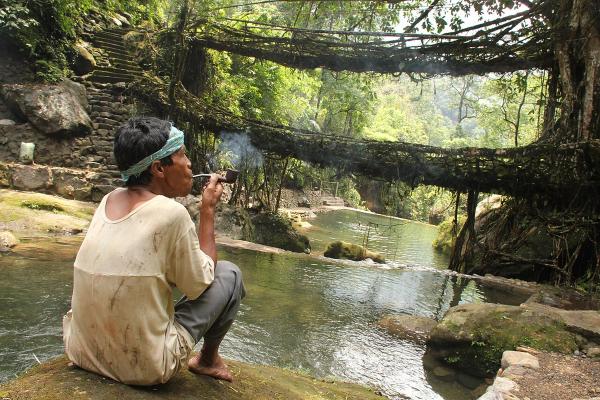
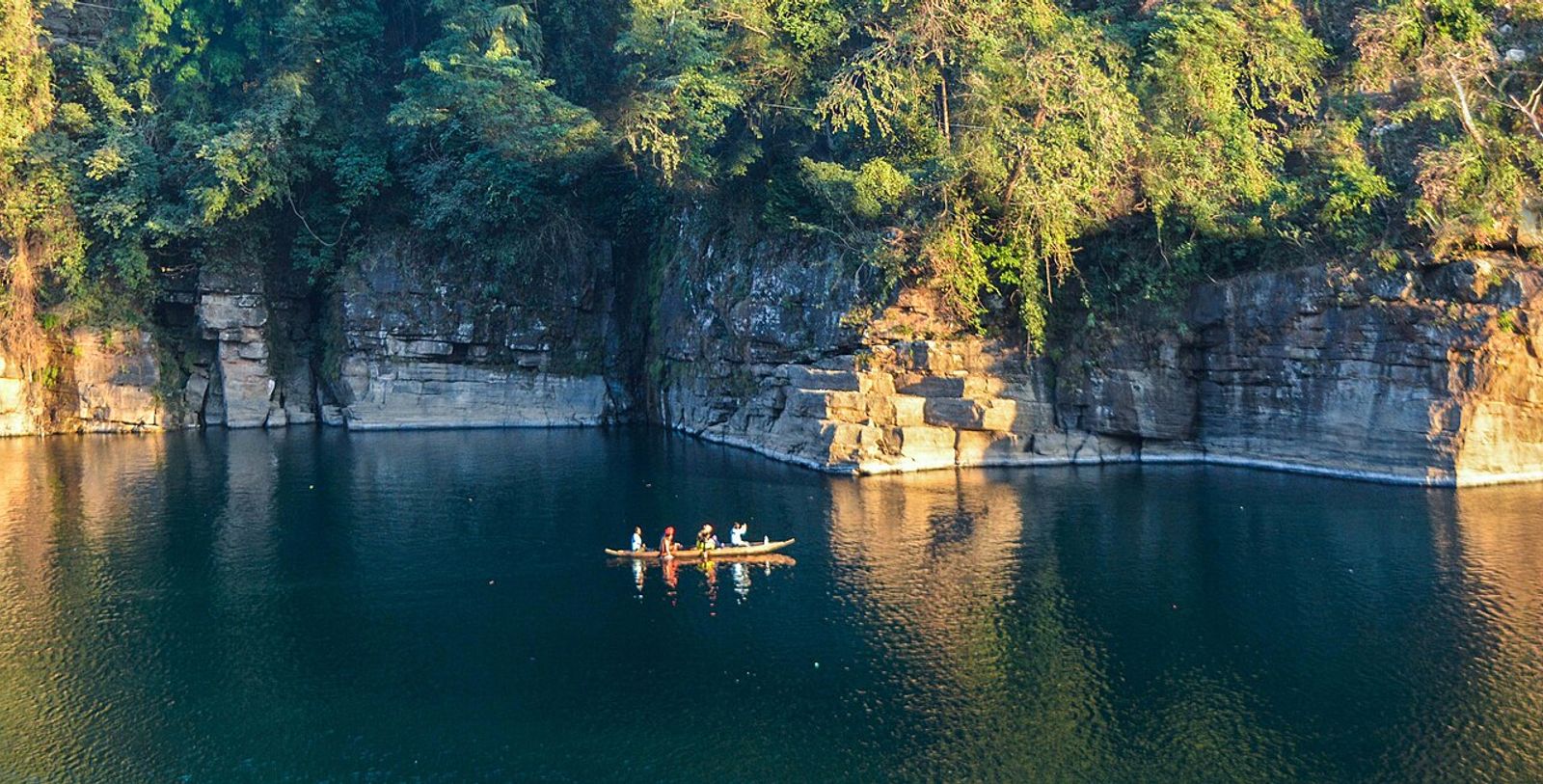
Cherrapunji, in the East Khasi Hills, receives eleven metres of rainfall per year. The rivers that run through the hills are fed by this rain. The living root bridges are a response to this rain. The flooded gorges that the bridges cross are the same gorges where Khasi villages have been settled for centuries, their property passing from mother to daughter, their names carried in the female line down through the rains, unbroken.
The rain connects to the bridges, the bridges to the villages, the villages to the households, the households to the khadduh who inherited them. It is, when you trace it, a single continuous thing — the world as the Khasi have organised it against the fact of being the wettest place on earth.