There is a polo ground in Imphal that most polo players have never heard of.
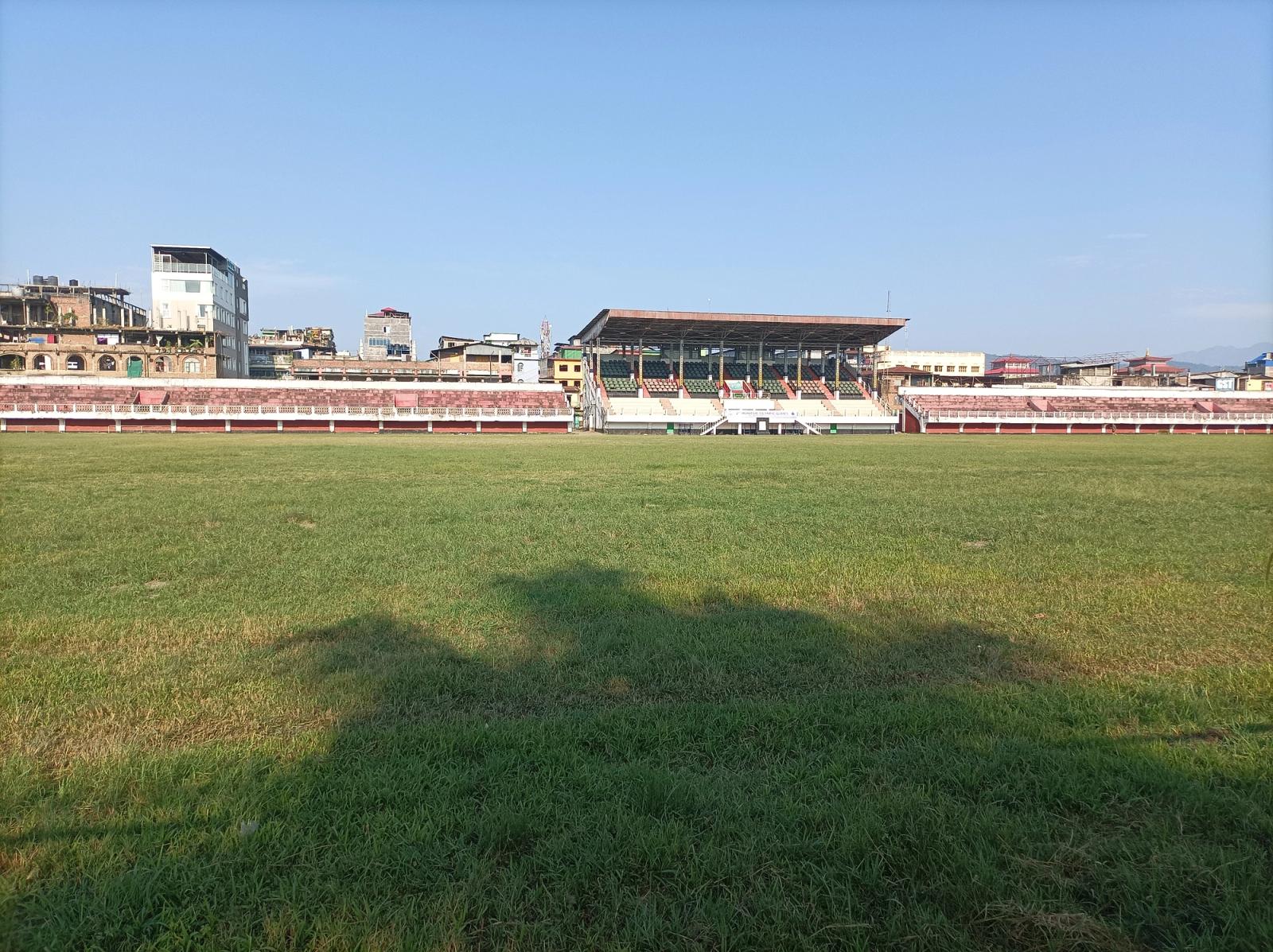
It is called the Mapal Kangjeibung. It sits at the centre of the Imphal Valley, ringed by hills on every side, and it has been there — in some form — for well over a thousand years. The ground is not manicured in the Argentine fashion. The ponies grazing at its edge are small, compact, unhurried animals with deep chests and patient eyes. The men preparing to ride them are Meitei, the dominant people of Manipur's valley, and they have been playing this game here since long before the British arrived, long before the word "polo" existed, long before anyone in England or Argentina or Dubai had ever sat on a horse with a mallet in hand.
The game they play is called Sagol Kangjei. In Meitei, sagol is the pony, kangjei is the stick. Pony-stick. The name has the directness of something that doesn't need to explain itself.
What the Game Was
Sagol Kangjei was not simply sport. In the Meitei royal court, it was ceremony. Kings played it. The game appears in the Puyas — the ancient Meitei texts — as a ritual offering, a contest with cosmological significance. The Mapal Kangjeibung was not just a field; it was a stage on which royalty demonstrated its relationship with the divine. The Manipuri pony, the Meitei Sagol, was not simply transport; it was a creature of cultural identity, bred in the valley for centuries, suited to the altitude and the terrain in ways that no imported breed could match.
The rules of the game were specific and documented. Players on horseback, a wooden ball, bamboo mallets, two teams, two goals. The scoring was clear. The fouls were clear. This was not folk play improvised in a field — it was a codified game with centuries of tradition behind it.
Manipur also has what may be the earliest written record of polo rules anywhere in the world. The Kanglei texts reference the game with a precision that suggests an already mature sporting culture. Historians date organised versions of the game in the valley to at least the 7th century CE, possibly earlier.
For over a thousand years, Sagol Kangjei was Manipur's game. Then, in the middle of the 19th century, the British came to watch.
The Men Who Wrote It Down
In the 1850s, British political agents and military officers were stationed in and around Manipur and the neighbouring state of Cachar. They were administrators of empire, mapping and managing a region the colonial government found strategically important and culturally opaque.
Some of them watched Sagol Kangjei.
What they saw was fast, physical, and immediately gripping — even to eyes that had no frame of reference for it. Lieutenant Joseph Ford Sherer was among the officers who observed the game and recognised something in it that could translate. In 1859, a group of British officers formed what is now recognised as the first modern polo club at Silchar in Cachar — barely a day's ride from the Imphal Valley. They had, in effect, taken the Meitei game, adjusted it for their own horses and their own purposes, and given it a new name. Polo likely derives from the Tibetan pulu, the word for the willow root from which the ball was traditionally made.
From Silchar, the game moved quickly. British cavalry officers carried it to Calcutta, then to England. The Hurlingham Club in London drew up a standardised set of rules in 1874. From England it went to Argentina, where the pampas and the estancia culture were perfectly suited to it. From Argentina it became global. The sport that the Meitei had played as ceremony, as court ritual, as royal offering, became the defining leisure of the European aristocracy and, eventually, of global wealth.
The Manipuri pony did not travel with it. Modern polo is played on Argentine-bred horses — large, fast, purpose-trained animals with nothing in common with the Meitei Sagol except ancestry. The people of Manipur's valley did not travel with it either. When polo is spoken of today — in the pages of society magazines, in the paddocks of Palm Beach and Jaipur — Manipur is not mentioned.
What Remains
The ground is still there. Polo is still played on it. The Manipur Polo Association has been working for years to have Sagol Kangjei recognised internationally for what it is — the origin. There is now some acknowledgment from global polo bodies that the game's roots run through this valley, though acknowledgment and credit are not the same thing.
The harder loss is the pony.
The Meitei Sagol — the small, sturdy, distinctive horse that the Meitei people bred over centuries for this specific terrain and this specific game — is now critically endangered. There are fewer than a thousand left. They are not suited to modern polo, which demands the speed and size of Thoroughbred crosses. They are not profitable as workhorses in a valley increasingly connected to the national road network. The conditions that made them essential have largely passed. Several conservation efforts are underway, led by Manipuri breeders and cultural organisations who understand that the pony is not merely an animal — it is a living piece of the game's original vocabulary.
To lose the Meitei Sagol would be to lose the last physical link between the game as Manipur played it and the game as the world now plays it.
The Ground That Remembers
The Mapal Kangjeibung does not announce itself. There is no large sign declaring that polo began here. There is no museum at the entrance with a timeline and an exhibit of mallets. There is a ground, and hills, and ponies, and men who have been playing this game since before the rulebook existed.
If you stand at the edge of the Mapal Kangjeibung on a morning when the valley mist is still burning off the hills and the ponies are moving at a warm-up canter, you will see something that has not essentially changed in a thousand years. The colonial century came and went. The game was taken and renamed and exported. The world plays polo now in a hundred countries, with rules that were written down in London.
But the ground in Imphal remembers what it was before all of that. And so do the people standing at its edge.