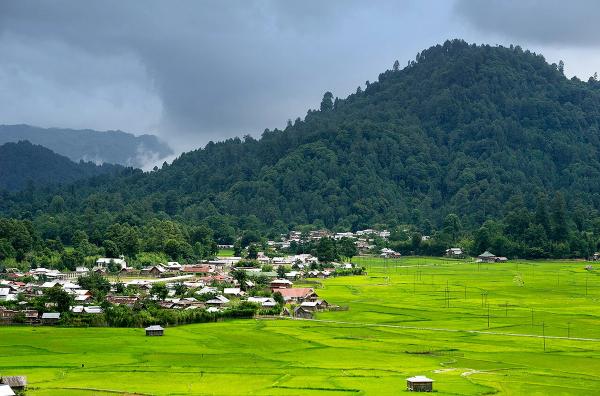
India sees its first sunrise here. But Tawang does not experience dawn the way the plains do — as light arriving. It experiences it as the mountains releasing the dark, slowly, in stages, the peaks catching colour while the valleys below remain in night. At 10,000 feet, the air is thin enough that the blue of the sky is a shade deeper than anywhere else in the country, and the stars the night before are correspondingly brighter, closer, almost presumptuous.
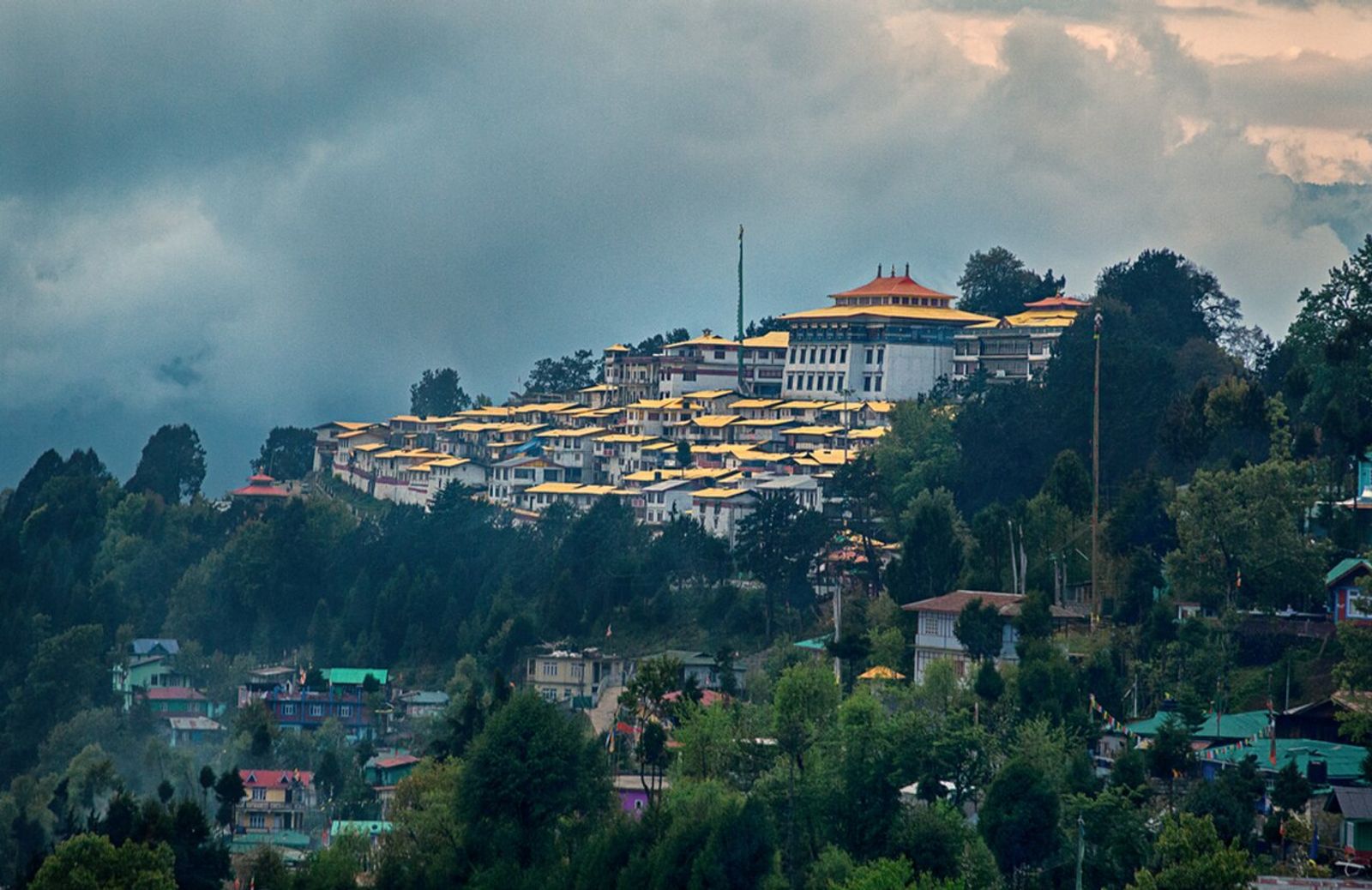
Tawang Monastery was built in 1681 by the Merak Lama Lodre Gyatso, on instructions said to have come from the fifth Dalai Lama himself. It is the largest Buddhist monastery in India and the second largest in the world after Lhasa — a fact that Tawang mentions without apparent pride, the way old things mention their age. It sits on a ridge above the town, behind walls that are four hundred meters in circuit, housing over 450 monks and a library of manuscripts that scholars from four countries have been studying since the 1950s without finishing.
The Sixth Dalai Lama
Tawang is the birthplace of Tsangyang Gyatso, the sixth Dalai Lama, born in 1683. He is the anomaly among his lineages — a poet and a romantic who rejected the monastic vows, who wrote about longing the way a monk is not supposed to write about longing: directly, without allegory, in language that was not ritual but simply human. One of his verses goes: 'White crane, lend me your wings / I shall not fly far — / Only to Litang, and back.' He was a god-king who wanted to travel like a person.
He was deposed by political rivals and died young under circumstances that have never been fully explained. His verses are a counter-argument to every rigid interpretation of the tradition he was born into. The monastery keeps his memory with particular care. His birthplace, a day's walk from the gompa, is a small stone house maintained in the condition it held on the day he was born. The monks who watch over it are the forty-first generation to do so.
The Monpa People
The Monpa are among the oldest inhabitants of what is now Arunachal Pradesh. Their culture sits at the precise intersection of Buddhist Tibet and the animist traditions of the hills — they practice both, simultaneously, without apparent contradiction. The thangka paintings that line the monastery walls were made by Monpa craftsmen whose families have been making them for three hundred years. The pigments were ground from minerals found in the surrounding mountains. The gold leaf was applied with brushes made from a single animal hair.
In Monpa villages, the entry to every house is marked with a carved wooden face — a ward against spirits, or a welcome to them, depending on who you ask. The answer tends to differ by household, which is perhaps the most honest position on the matter.
The Road That Changed Everything
The road to Tawang was completed in 1983, connecting it to the rest of India for the first time by surface route. Before that, the only way in was on foot, over the Sela Pass, which sits at 13,700 feet and is buried under snow for four months of the year. For most of its history, Tawang existed in a state of geography-enforced isolation that shaped everything about it — its architecture, its ritual calendar, its sense of time.
The road brought electricity, schools, mobile phones, and tourists. The monks now have WhatsApp. The butter lamps still burn in the prayer hall at four in the morning, the way they burned in 1681, and the chanting that begins before dawn carries across the valley, down into the town, into the houses where the Monpa families are starting their fires and making butter tea and preparing for a day that India's first sunrise has, technically, already begun.