She learned the name for that grove from her grandmother, who learned it from hers. In the Adi language, certain forest groves carry a grammatical marker that translates not as a place but as a relationship — something you are inside of, something that has obligations to you and you to it. She did not think of this as unusual. Neither did her grandmother. It was simply how groves were named.
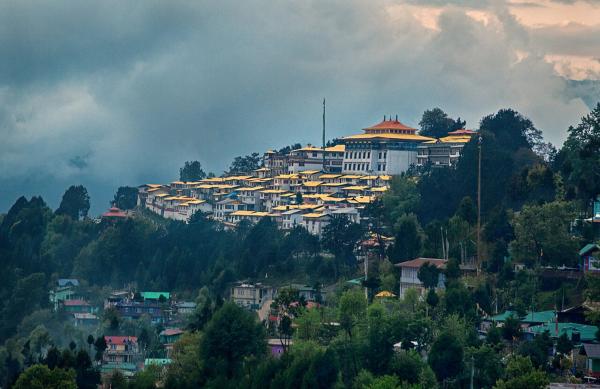
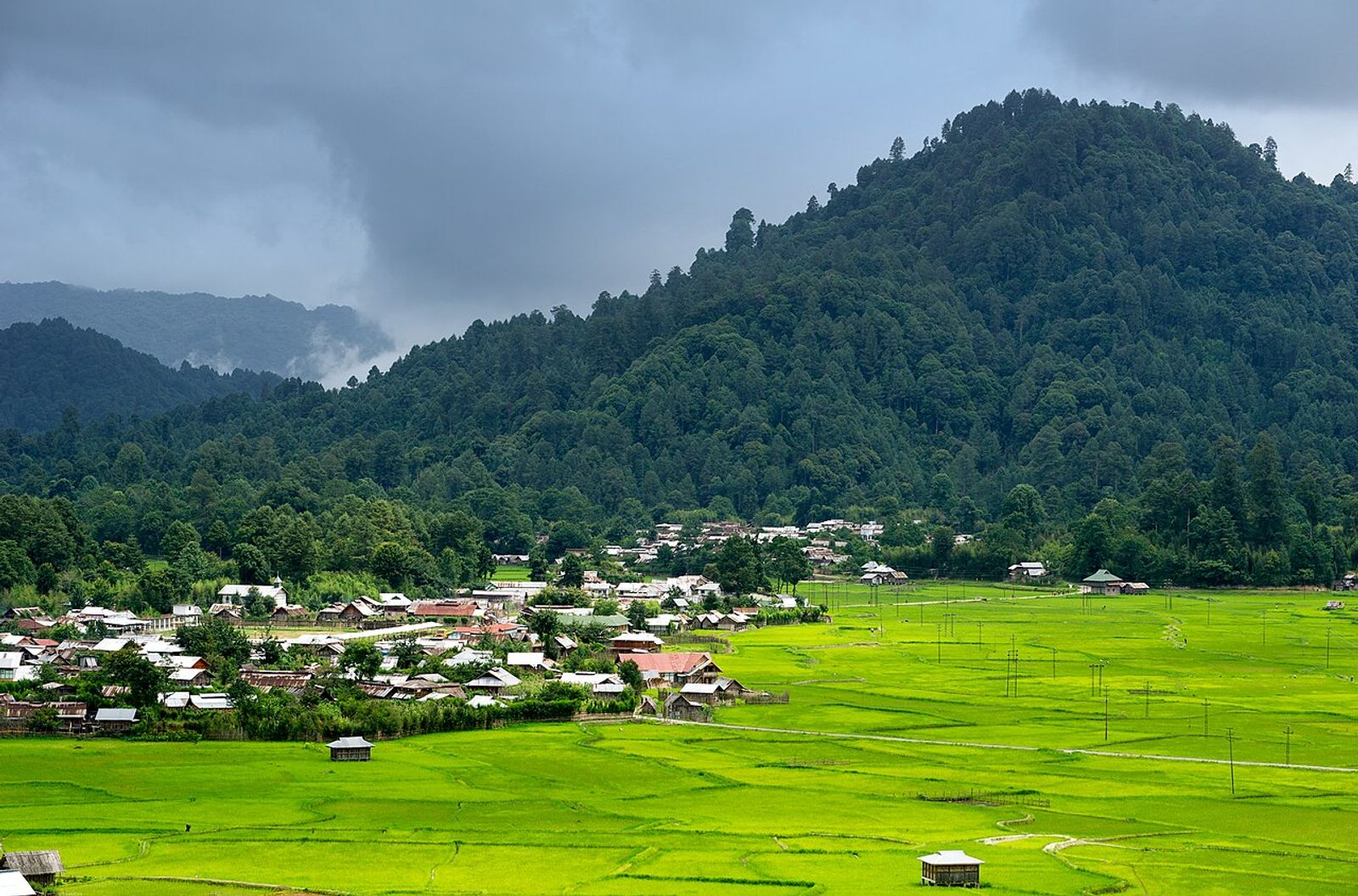
The Siang river comes down from Tibet and cuts through the hills of eastern Arunachal Pradesh in a gorge so deep that sunlight reaches the river for only a few hours a day. On the ridges above this gorge, the Adi people have been farming, hunting, and building their communities for as long as any record exists in this part of the world. Their name for themselves — Adi — means simply the hill people, the people of the heights. It is an identity rooted entirely in topography.
Arunachal Pradesh has 26 major tribal groups and over a hundred sub-tribes. The Adi are among the largest, numbering around 200,000, spread across a region that includes some of the last intact subtropical forest in South Asia. The forest is not a backdrop to Adi life. It is the structure within which Adi life is organised.
Donyi-Polo
The Adi religious tradition is called Donyi-Polo — Donyi meaning sun, Polo meaning moon. The sun and moon are not worshipped as gods in the Western sense but treated as the primary forces that organise the natural world and by extension the social world. Rituals follow the agricultural calendar, which follows the seasons, which follow the sun and moon. The chain is unbroken.
When Christian missionaries arrived in Arunachal Pradesh in the twentieth century, conversion among the Adi was relatively slow. The Donyi-Polo tradition had been formalised in the 1970s into something more like an organised religion — with a sacred text, a clergy of sorts, and formal institutions — partly as a defensive move against conversion pressure. The formalisation was unusual: an oral tradition converting itself into institutional form in order to survive contact with traditions that had institutional forms. It has largely worked.
The Forest as Relative
The Adi do not describe the forest as a resource or a landscape. They describe it as a relative — something they are inside of, not something they are looking at from outside. Specific groves are sacred and cannot be cut. Specific animals are totemic for specific clans. The relationship between the human community and the non-human world is organised by the same principles as the relationship between people: reciprocity, obligation, restraint.
This has practical consequences. Adi villages have maintained forest cover in their territories that has been lost elsewhere in the region. Ecologists studying biodiversity in the eastern Himalayas have noted that the areas with the strongest tribal land rights and the deepest traditional ecological knowledge tend to be the areas with the most intact forest.
To walk through an Adi forest with someone who knows it is to listen to a different kind of map — one that names the trees not by their species but by their obligations. This grove is sacred. That ridge belongs to this clan. The bird in that tree is the ancestor of this family. The map does not describe geography. It describes who owes what to whom. And the forest, in its way, agrees.