The hornbill is a bird that cannot be ignored. Its wingspan can reach five feet. Its casque — the helmet-like protrusion that crowns its bill — is the colour of a flame. In Nagaland, sixteen tribes have worn its feathers in their headdresses for as long as anyone can remember, not as decoration but as honour. The hornbill does not die easily. It mates for life. When one dies, the other is known to starve.
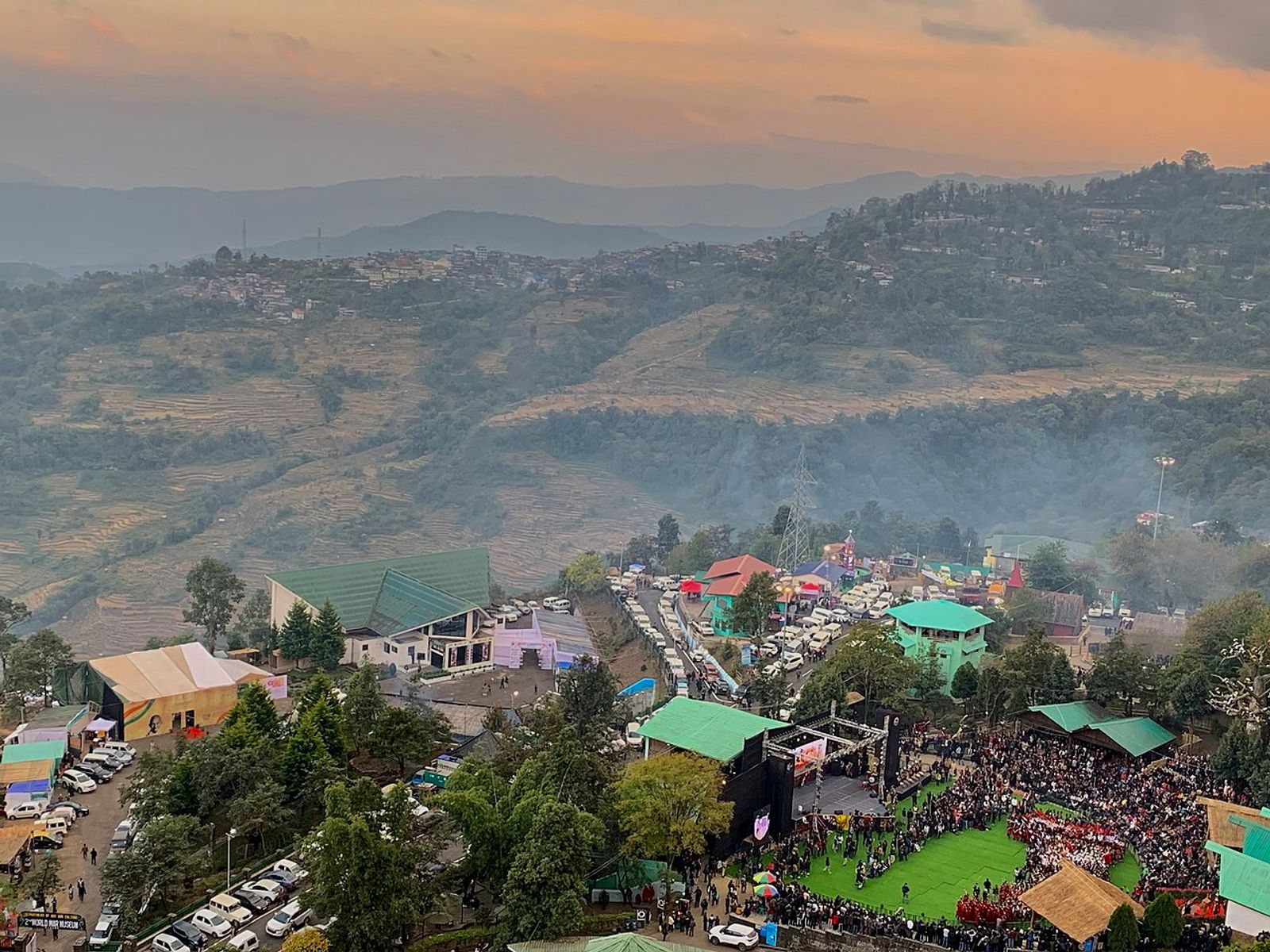
Every December, for ten days, something happens at Kisama Heritage Village, twelve kilometres from Kohima. The tribes come down from their hills. They bring their songs, their dances, their weapons, their textiles — everything that marks them as distinct from the fifteen other peoples who share this state. For much of Nagaland's history, these tribes were not neighbours but adversaries. The Angami and the Ao, the Lotha and the Konyak — each with its own language, its own cosmology, its own understanding of what the world owed it.
The Hornbill Festival was started in 2000 by the state government, a deliberate attempt to share Naga culture with the outside world and to encourage the tribes to perform their traditions for each other. Anthropologists worried it would become a museum exhibit. What happened instead was not a performance. It was a permission.
Sixteen Tribes, One Ground
The Konyak headhunters, whose last raid was within living memory, perform their war dance — a dance that was never meant to be watched, only felt. The Zeliang women arrive in their beaded regalia, each bead carrying a code that marks their village, their lineage, their status. The Sumi tribe's Aghüto dance has been performed for two thousand years to mark the harvest, and nothing about the rhythm has changed. The Chakhesang fire dance: men leap over flames in the dark and the crowd holds its breath.
The music is not music in any Western sense. There are no scales, no harmony in the classical mode. There is rhythm, and there is weight, and there is the sound of sixteen peoples saying, simultaneously: we are still here.
What the Feathers Mean
The inter-village raids that defined Naga life for centuries were not simply violence. They were a form of conversation between peoples who had no shared language. A warrior returned from a successful raid with the right to wear the hornbill feather in his headgear. The feather was a biography. It said something specific about the man who wore it: what he had risked, what he had survived, what his village now owed him in return.
The tribes were Christianised rapidly through the twentieth century — Nagaland is now the most Christian state in India, over ninety percent Baptist. The missionaries who arrived with the British largely succeeded in suppressing the old ceremonies. What the Hornbill Festival has done, carefully and without announcement, is allow those ceremonies back in. Not as religion. As memory. As cultural inheritance that belongs to the people regardless of what else they believe.
The Bird Itself
The hornbill, for its part, is now protected. The headdresses at the festival use old feathers, inherited, not new. The actual bird watches from the forests of the Dzükou Valley, enormous and unhurried, the way things that outlast everything tend to watch.
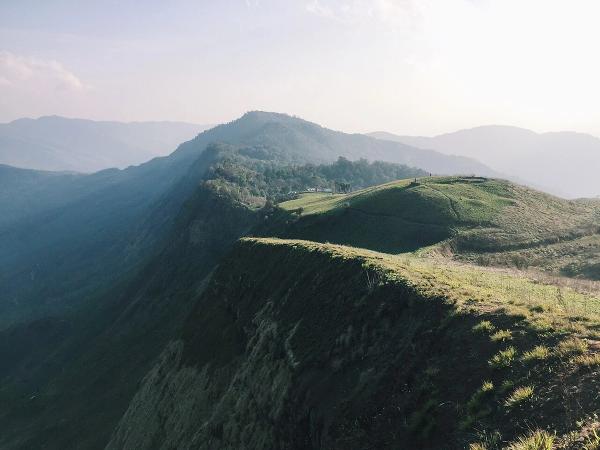
The Dzükou Valley — a high alpine meadow on the Nagaland-Manipur border, accessible only on foot — blooms every seven years with a lily that grows nowhere else on earth. The Naga tribes have known this for centuries. They call the valley their garden and go there in pilgrimage.
In December, when the world comes to Kisama to watch the festival, the valley is quiet. The lilies are resting. The hornbills are in the canopy. The river below the hills moves without hurry, carrying the hills slowly toward the sea, the way rivers have always carried everything that tries to stay.